Kohei Igarashi
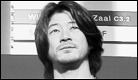
His graduation film Hold Your Breath Like a Lover was the only Japanese film at the 2014 Locarno film festival. Julian Ross talks to Kohei Igarashi.
His graduation film Hold Your Breath Like a Lover was the only Japanese film at the 2014 Locarno film festival. Julian Ross talks to Kohei Igarashi.

At a time when Japanese films are making fewer waves internationally, Ayumi Sakamoto's debut feature Forma was widely seen on the festival circuit and nabbed two awards, including in Berlin.
"The producer would say, 'If Kurosawa is directing the film, never mind the jingi.'"

"In Japan you hardly ever see films or television programmes that deal with the fact that there are so many immigrants."

"Whether you are an important person or poor, left-leaning or right-leaning, what is important is what you click on."
Masao Kobayashi recounts his adventures as a Japanese producer in North Korea for the film Somi - The Taekwon-do Woman. By Johannes Schönherr.
"When I make a Tetsuo movie I don't shoot it in one month. I need to dedicate enough time to the production, and I cannot give up that style."
"For me youth is necessarily a destructive force. The idea that youth is a splendid thing, as they show in commercials, is merely an illusion."
"The question is why the police in Japan don't stop their illegal activities. It's because the people are docile."
"If a film said 'This is Takahiko Iimura' the image will be limited by an image of myself, but if a film said 'This is not Takahiko Iimura' the possibilities are limitless."
"It wasn't like I wanted to make films or wanted to surround myself in a filmmaking environment. I was simply told, 'Here's a job for you. Take it.'"

"What I believe in most is the power of people's imagination to fill in what isn't there."
"I was a bit worried the yakuza were going to turn up at the theatre when we first started screening the film in Tokyo."
"The idea of racial harmony was part of Japanese propaganda, not a reflection of reality."
"I like working as part of a large group. That's one of the aspects of filmmaking that makes it unique among all the visual arts: the fact that you have a crew of a hundred people all working toward one work of art."
"In Japan, filmmakers are so preoccupied with getting the job done that they can never relax on the set."

"I take a clear distance from Hollywood. This alone puts me at a completely different starting point from most Japanese critics today."
"Most of the older filmmakers were all angry with me for making such a personal documentary. They want me to be more political."
"A true filmmaker doesn't make films from the point of view of those in power. To me, that's a fundamental rule: you have to make films from the perspective of the weak."
"I try to explore the meaning of the words 'terrorism' and 'terrorist'. After 9/11, one of their original implied meanings - 'against the ruling power' - has become corrupted. In my film I refer to the original derivations of the word as it was first used during the French Revolution."

"When I come back to Japan I feel like a foreigner. Almost everything looks fascinating to me."

"If we find people that will allow us to do 100% what we want to do, of course I wouldn't mind making a commercial film. But otherwise I will just stick with the independent films."
"In Osaka everybody called me Nobu on the set, but in Tokyo I am 'Mr. Director'."

"There isn't really a system of auditions in Japan. That's why there's a lot of typecasting going on."

"I don't mind if somebody else adapts one of my manga. I don't like repeating myself, and I feel that adapting my own manga is essentially repeating something I've already done once before."

"I don't feel I'm a representative of Japan at all, nor that I'm representing myself. I represent the film and the staff of 100 or 200 people behind it."
"Always isn't really about the past, but the future. People need to take control of their lives. I want people to do that. I made the film for those reasons."
"There is one type of set designer that builds the set according to the director's wishes. But that's not my way. I'm interested in an exchange of ideas between me and the director."
"I've told myself that it would be good to do these genre movies the way the producer wants and then I would have a lot of work, but somehow I always deviate from that."
"I like to confuse the audience: they're laughing one moment and then the next they suddenly need to get serious. I like to keep them on their toes and not give them any chance to get bored."
"We're an animation company and we're really interested in putting out anything that falls into the category of animation. We'll do anything that we think sounds interesting."

"I want to make a comedy, but it never happens. I wonder if there's something in me that's stopping this?"
"The idea is to encourage these new young filmmakers with the same chance to direct their first works as I did with Yamashita and Kumakiri."
"The people who went to see Toei films liked yakuza movies, but people who went to see Nikkatsu films came for the drama."
"I learned filmmaking from analysing my favourite directors. I don't feel I learned all that much at film school."
"To get the aggression across on screen I really had to get in there and be really energetic in my use of the camera. My formula was that I had to be ten times as energetic in making the film than what I wanted to express on screen."
"Most people can't go to pink theatres, for various reasons, so I wanted to do things the other way round - to bring pink film to the people."
"I believe that Appleseed is spiritually in line with anime in general. It is, in a sense, a new type of animation."
"When people refer to filmmaking as my job I'm always a bit embarrassed, because I don't consider what I do as anything more than having a great time."
"My goal is to always make a new movie that nobody has ever seen before. I think I've proven that with Innocence."
"I felt it would be nice to make a family story in which no big tragic moments happen."
"I used to think that documentary-style filmmaking was impossible in fiction because everything is already set down in the screenplay and the storyboards."
"I'll do whatever it takes to make my films. That's the difference between me and other directors."
"It's the people who are different from the norm who interest me, and especially if they don't realise that they are different."
"It's a bit like a gourmet chef with a very classy restaurant but no customers, who is asked to cook cheaper, more popular food and suddenly sees people lining up to eat."
"I find it very admirable if people show the strength to try and achieve something, regardless of whether they succeed or not. But this spirit is something that I feel is missing in the attitude of today's Japanese people."
"I consciously tried to make a non-genre film, but I knew that perceptive viewers would clearly recognise it as a monster movie."
"Young women in Japan are a lot more open about sex these days. There are a lot more scenes in pink films now that show the women on top of the guys."
"If I told you that I wanted to make a film but couldn't, that would sound better. But actually I didn't have any intention of making a film."
"I always wanted to make a film in which every image is infused with eroticism. A totally erotic film. Even Tetsuo I made with that idea in mind."

"If society is stagnant, you should take action yourself and deal with that stagnancy as an issue."
"For me it was important from the start to make commercial films, films for big audiences."
"When I explained to the actors what their characters were about, I didn't tell them they would become lovers in the end."
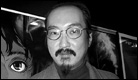
"Female characters are easier to write. With a male character I can only see the bad aspects. Because I am a man I know very well what a male character is thinking."

"If you want to describe the problems of Japanese society today, teenagers are a fitting symbol. It's always them who are confronted with those problems."

"There are plenty of interesting stories to be told about everyday people in ordinary situations. Where are the filmmakers who want to do this? Where are the Mike Leighs and Ken Loachs of Japan?"
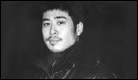
"I liberated my own desires for violence and tried to open the inside of my mind to let out all the poison. And it's all there in the film."

"I'd like to throw away the idea of having to shoot a certain way for it to end up as a real film."
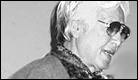
"I am fully aware that there is a generation gap between where I stand and where those kids stand."

by Tom Mes

by Jasper Sharp

by Jasper Sharp
by Tom Mes

by Tom Mes and Jasper Sharp

by Tom Mes

Copyright © 2001-2024 Midnight Eye.